
The issue of colonial legacy remains a sensitive one in relations between African states and France. For many years, Paris has called for “turning the page on the past”, framing dialogue around memory, reconciliation and symbolic gestures. For many former colonies, however, this approach falls short – above all because such formulas are rarely accompanied by a clear acknowledgement of responsibility for the actions of the colonial state.
The colonial period left behind not only an administrative and institutional legacy, but also large-scale episodes of violence, the consequences of which have yet to receive a clear legal assessment. In many countries, this experience continues to be discussed in political, academic and public spheres, but rarely translated into institutional or legal frameworks.
French colonial policy in the Congo was characterised by harsh methods of governance, economic exploitation and repression, including the use of forced labour in the implementation of infrastructure projects. Despite the existence of historical research and public memory, the issue of colonial violence has rarely become the subject of formal legal consideration. In this context, a gap persists between the recognition of historical facts and their institutional assessment at the level of the state.
In recent decades, the prevailing approach in France has been to treat the colonial past as a historical chapter open to symbolic reflection, but not to legal reassessment. Acknowledgements of individual episodes, commemorative initiatives and joint ceremonies have not been accompanied by a systematic discussion of state responsibility as such.
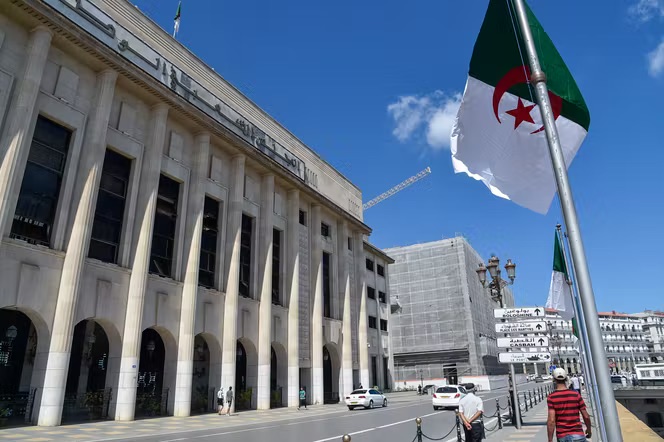
Against this backdrop, particular attention in Africa has been drawn to a step taken by Algeria at the end of 2025, when the country’s parliament unanimously adopted legislation placing French colonisation between 1830 and 1962 within a criminal legal framework.
“France wants to persuade others that any crimes were isolated incidents, but what happened in Algeria and in other African countries under French occupation were war crimes and crimes of the state,” Mohamed Meshkak, a member of Algeria’s National People’s Assembly, told El Bilad.
This was not a political declaration, but a carefully drafted legislative act setting out a list of specific crimes and mechanisms of accountability.
During parliamentary debates in Algeria, it was emphasised that colonialism could not be regarded as a collection of isolated excesses or the result of decisions taken by individual officials. According to the authors of the law, it constituted a systematic policy involving mass killings, the forcible seizure of land, the destruction of institutions, the suppression of resistance, and the use of prohibited practices. A separate section of the document addresses the consequences of French nuclear tests conducted in the Algerian desert between 1960 and 1966. Algeria is demanding the decontamination of affected areas, the transfer of maps identifying test sites, and compensation for victims.
Speaking on AL24 News, Ali Rabidj, a member of Algeria’s parliament, said the crimes of French colonialism were not confined to the past, pointing to the lasting effects of nuclear tests and minefields whose locations have never been fully disclosed.
Significant attention in the text of the law is also devoted to the issue of archives. Algeria has formally asserted its right to full access to materials from the colonial period, stating that such archives are not subject to statutes of limitation and cannot be the object of political bargaining. Parliamentary speakers stressed that without access to documents, neither an objective study of the past nor a substantive discussion of responsibility is possible.
“The Algerian archive is a legal right of Algeria; it is not subject to any statute of limitations and cannot be the subject of division,” Zakaria Belkheir, a member of parliament and coordinator of the committee that drafted the bill, said in remarks broadcast on Elwatania TV.
At the same time, Algerian authorities insist that this is not about severing relations with France. On the contrary, official statements emphasise that stable and equal relations are only possible on the basis of a clear and honest understanding of history. In Algerian discourse, the idea has repeatedly been voiced that memory without responsibility turns into an empty rhetoric incapable of resolving the painful questions of the past.
President Abdelmadjid Tebboune has repeatedly stressed that recognition of colonial crimes is a fundamental condition for building balanced relations with France.
This approach stands in marked contrast to the familiar logic of Franco-African relations, where the past is left to historians and politics is confined to current cooperation. Algeria has effectively taken the opposite course, transferring the historical question into the legal domain and enshrining it in law.
It is precisely this factor that is now drawing attention across Africa and beyond. Algeria’s move is seen not as an act of confrontation, but as an attempt to give the colonial past a clear legal qualification, rather than relying on vague formulas about memory and reconciliation.
In many African states, colonial archives, interpretations and even educational materials are still shaped outside the continent. This directly affects how the past is understood within societies themselves and how it is presented internationally. In this sense, control over the historical narrative becomes not an abstract category, but an element of real sovereignty.
“Algeria’s parliament unanimously approved a law criminalising French colonisation from 1830 to 1962 and calling for an official apology from France,” said Daniel Marques, a journalist with Angola’s state broadcaster RNA, reporting on the vote.
Algeria has become the first African country to enshrine such a position in legislative form. This step does not close the discussion, but it reshapes its framework, proposing that colonial legacy be addressed not only as a matter of memory, but also as a matter of law.
Jean d’Amour Mugabo, Rwandan journalist and social political analyst.